
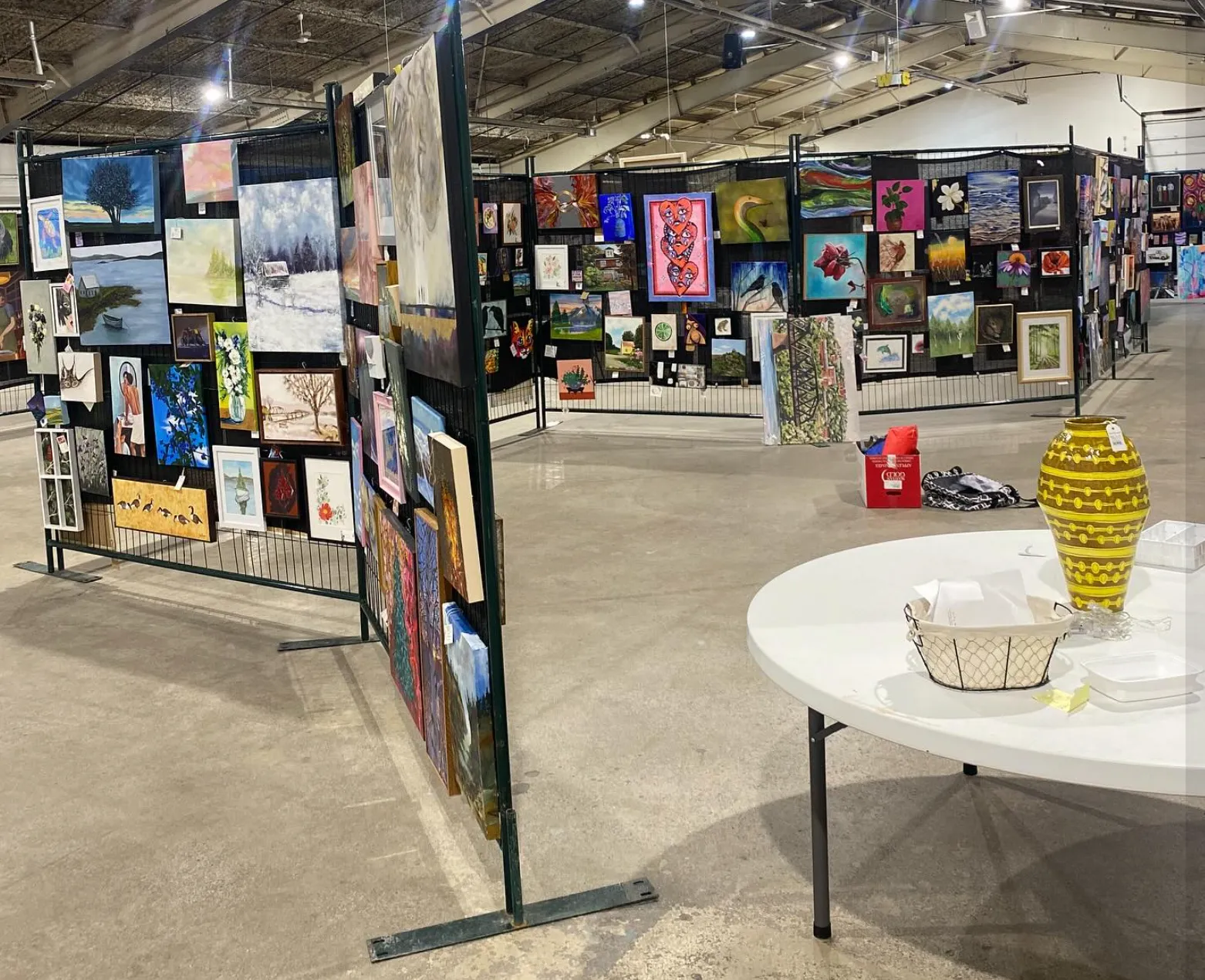
What if I told you: “For a couple hundred dollars, I’ll showcase twenty of your best paintings alongside work from other artists across all disciplines. Over four days, hundreds of people will come through and vote with their wallets for their favourites. You’ll observe how your pieces look beside others’ work and discover artistic and finishing flourishes to take back to your studio. You’ll get honest signals about what’s working and what needs improvement and maybe leave with some cash in your pocket. Plus, you’ll meet other artists to trade notes with and collectively get better.”
Sounds like a pretty good deal, right? That’s the lens through which I approach art fairs.
I think we’d all be better off taking this more pragmatic approach, especially when we’re just getting started. A lack of sales can be a real gut punch to our confidence, particularly when we don’t even make back the entry fee. I can’t claim immunity to these feelings—I feel that same pang of disappointment when pieces don’t sell. But I’m also a working scientist with extensive experience at failing: failed experiments, scorned grant applications, rejected articles. I had decades of failures before I ever put brush to canvas, which gave me ample opportunity to develop better approaches to these challenges.
I’ve since applied those approaches to my art practice. The key shift: treat these events as iterative experiments for honing your craft rather than existential trials of your inherent talent or value as an artist. Making money as an artist absolutely matters—but this imperative may be best set to the side during the early stages of your practice. Paying attention to what these fairs teach you creates the foundation for future success, including financial success.
That’s how I approach group exhibitions and art fairs, including the Capital Art Sale in Fredericton, New Brunswick. As a veteran of nine sales, I’ve progressed from selling just a handful of pieces in my first event to becoming top seller at the most recent four. Over the coming weeks, I’ll share how I’ve developed this experimental approach—tips for both new and veteran artists, along with best practices that likely hold true for art fairs generally.
Upcoming posts will cover:
- Art Fairs for New Artists: The Experimental Mindset
- Finish Matters: The Craft Behind the Art
- My Pricing Strategy: Learning through Experimentation What Your Work Is Worth
Leave a Reply